MONOCHROME CAUSTIC · THE LISTENER
A Painting Made of Light
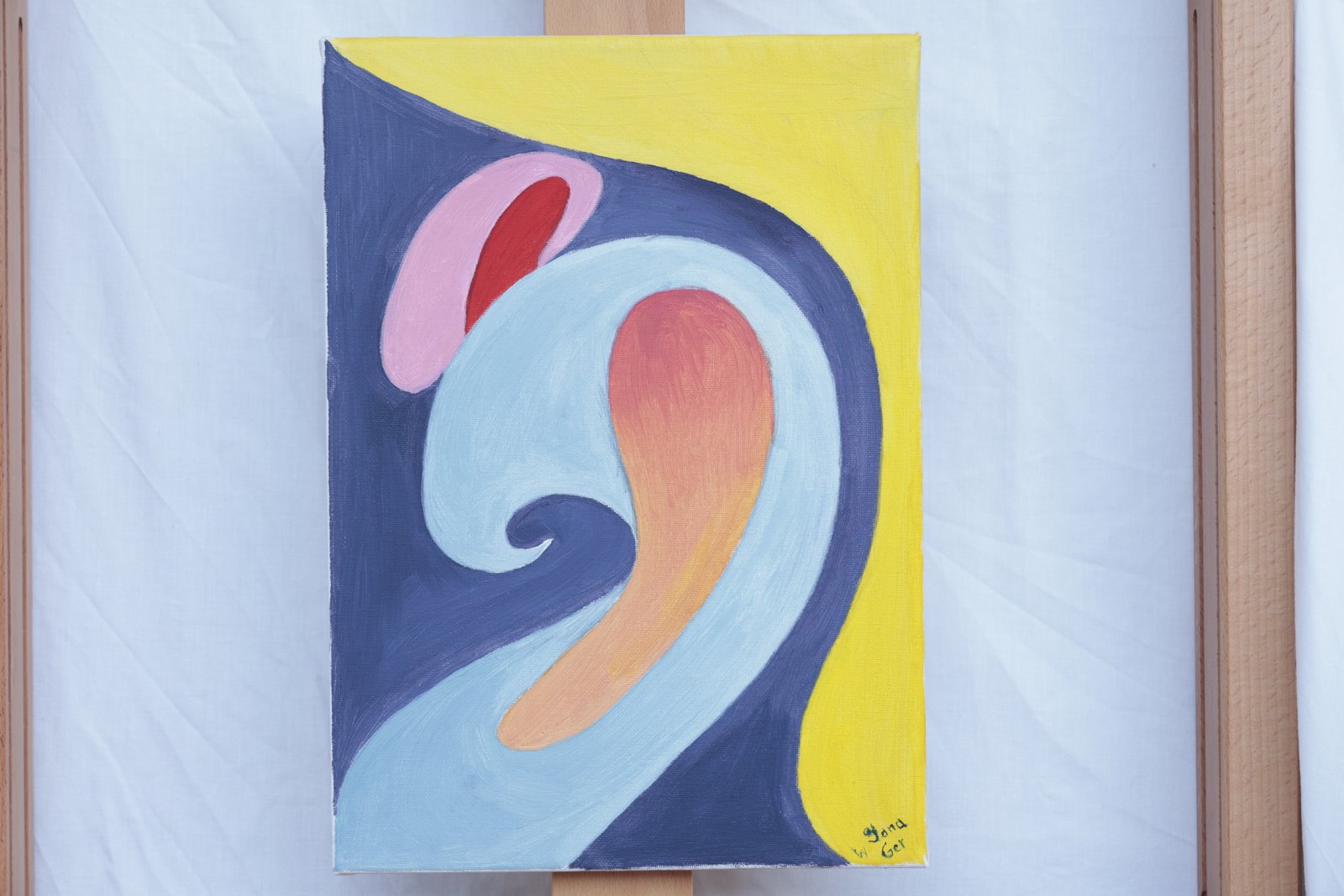
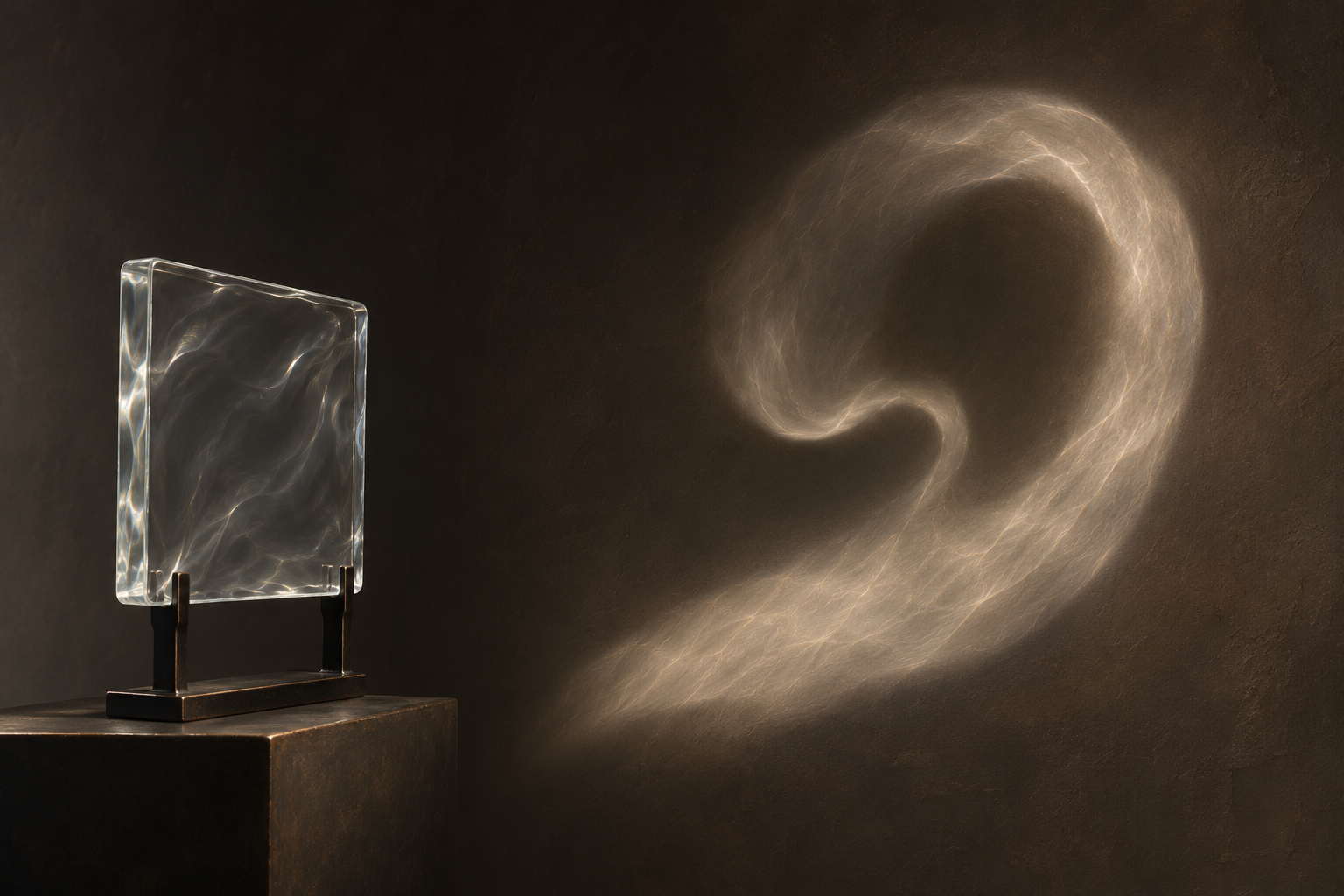
Follow the pale blue curl of The Listener as it moves from pigment to concentrated light. A clear plate with one shaped face bends the rays into the painting’s broad hook.
Explore the optical bench
01 / THE OPTICAL BENCH
One change. Two surfaces.
Switch the exit face between flat and shaped. The emitter, entrance face and screen stay fixed while the sampled rays and receiver image update together.
- Emitter
- Uniform directional white
- Plate
- 2 × 2 units · IOR 1.50
- Plate to screen
- 7 scene units
- Receiver film
- 96 × 96 · 1,024 spp
02 / THE MATCH
From outline to irradiance.
The target follows the painting’s blue curl and leaves its orange interior dark. The three panels share one exposure. The target’s mean matches the flat baseline for display.


- Pixel correlation
- 0.193 → 0.990
- Mean-normalized RMSE
- 0.971 → 0.142
- Bright-area overlap
- 0% → 95.8% IoU
- Receiver mean
- 70.2% of flat plate
Fit is measured on linear, independently traced 96 × 96 frames. Bright-area overlap uses intersection over union. The optimized curl has higher contrast while the receiver crop collects less light on average.
03 / THE PLATE
A clear face, shaped by light.
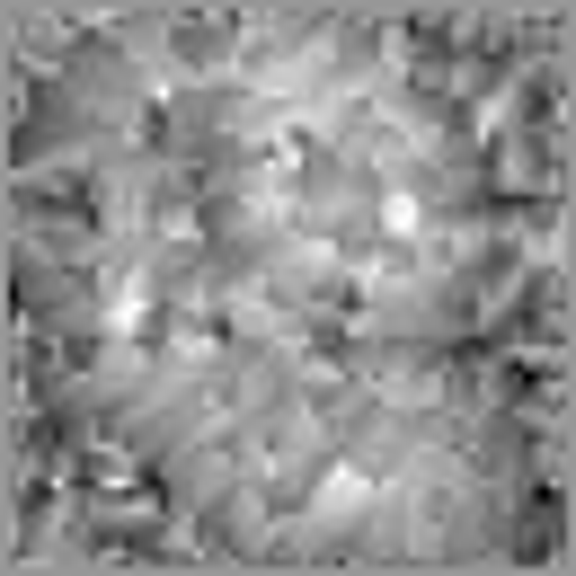
The solver moved vertices along the optical axis while holding the perimeter fixed. This mesh and heightmap come from the same surface that produced the caustic.
Optimized PLYFlat PLYEntrance and sides OBJRun dataReproduce this run
04 / THE PAINTING AND THE ROOM
The Listener in another medium.
The simulation uses collimated light, ideal clear glass and a fixed diffuse screen. The study leaves real illumination, surface finish, alignment and fabrication for a physical test.